Showing posts with label solidarity. Show all posts

September 28, 2023

A time for solidarity


 It’s been over five years since the historic teachers strike in West Virginia. To this day, it’s one of my proudest moments as a West Virginian. Teachers, cooks, bus drivers, students and parents like me filled the state House of Delegates and Senate galleries, the upper and lower rotundas and spilled out into the hallways of the state capitol. The frustration, and also the joy of being together in the fight for working people, were palpable.

Of course, union organizing in West Virginia is nearly as old and storied as our mountains, but the 2018 teachers strike was the first time I got to witness its power first-hand.

Today, even though we’re a few states away from the action, the strike of the United Auto Workers in Michigan is pretty darn exciting. Of course, another reason West Virginians can feel close to the UAW strike is that our own Walter Reuther, a native of Wheeling, was the longest-serving president of the UAW. Reuther, having survived two attempted assassinations, served as UAW president until he died in a plane crash in 1970.

During his time as UAW President, Reuther used (with a lot of success) a strategy called “pattern bargaining” against what were “the big three” auto companies – then General Motors, Ford Motor Company and Chrysler. Pattern bargaining was essentially a tactic to leverage the competition amongst the big three in order to advance the wages or improve the working conditions of all autoworkers.

Martin Luther King Jr., on the 25th anniversary of the UAW’s founding, wrote in a letter to Reuther, “Through trials, efforts and your unswerving devotion to humanitarian causes, you have made life more meaningful for millions of working people. Through moments of difficulty and strong obstacles, you have stood firm for what you believe, knowing that in the long run ‘Truth crushed to earth will rise again.’ As I have heard you say, the true measure of a man is where he stands in moments of challenge and controversy.”

The UAW is in a great moment of challenge because up until now, the union has never carried out a simultaneous work stoppage at “the big three” auto companies – now General Motors, Ford and Stellantis.

As with any historic moment, there is always important context. During the great recession around 2007 through 2009, the auto industry got a bailout of billions of dollars from the federal government, and at the same time autoworkers took massive cuts to their wages and benefits. Pensions all but disappeared. The companies introduced “tiers” which basically meant worse pay for the same work.

Since then, the labor of the autoworkers has generated $250,000,000,000 – yes that many zeroes — a quarter of a trillion dollars for the shareholders of the three companies. CEO pay is up 40% while autoworker wages went up 6%. Try to square that 6% with inflation having gone up 18%.

Now with major federal investments in a shift toward electric vehicles, the companies are forming “joint venture” battery plants, while closing profitable ones in Ohio, Illinois and Michigan. All of these maneuvers are “profit above all” attempts to pay lower wages and weaken worker safety standards at battery plants.

So, there’s a lot on the line, and what happens in Michigan will set the stage for whether electric vehicle manufacturing will be gateway to the middle class for hundreds of thousands of families, or deepen the already gaping chasm between the CEO class and the working class of this country.

The striking autoworkers are asking for fair pay, equal pay for equal work, and ensuring that EV jobs pay a good wage and are safe for workers. What’s not to like about that?

In the same letter King wrote to Reuther, he said something that hits home today. It’s a sentiment I hope we can echo to both the teachers and school employees who went on strike in 2018, and to the autoworkers in Michigan who are on strike today: “One day all of America will be proud of your achievements, and will record your work as one of the glowing epics of our heritage.”

September 08, 2021

Good for the soul


 These really are hard times. I don't know many people from any end of any spectrum who aren't a bit stressed out nowadays. But one recent dose of soul medicine for me came in the form of the United Mine Workers union Labor Day rally in Racine, WV. I've been going to those off and on for 30 years. 

It was really weird and sad to be there without seeing, talking with, and listening to my dear friend Elaine Purkey, a labor singer and songwriter who performed there pretty much every time until she died of COVID last year at around this time. Here's what I wrote about her when she passed. I took that hard.

This year was different and special in that Labor Day coincided with the 100th anniversary of the Battle of Blair Mountain, the largest workers' insurrection in American history (so far...), when 10,000 miners marched across southern West Virginian to gain the right to organize. Some UMWA members and supporters retraced that march this year. 

It was great to be around working class people committed to fighting for a working class agenda. I hope that all the efforts to commemorate past struggles help people commit to those of today. Things were rally bad here 100 years ago. Progress was made--and lost.

I'm so old-fashioned that I believe the only hope for the world is the solidarity of the diverse, multi-racial and international working class, even if part of it has lost its way for the time being. I know that without it, we aren't going anywhere.

I think we are at a pivotal point in history and it's going to be a close one.


June 03, 2020

Is 2020 over yet?

As the country reels from the events of the last several days, I thought I'd share a few items. First,
here's a statement from the board of the WV Center on Budget and Policy, a group AFSC helped to found more than 10 years ago and one of our closest partners. I'm proud to have been a board member off and on from the beginning:
In Solidarity for Racial Justice
Dear friends,
Like all of you, our staff and board at the WV Center on Budget and Policy have been horrified by the deaths of George Floyd, Breonna Taylor, Ahmaud Arbery, and countless other Black men and women. These events, occurring against the backdrop of a pandemic that disproportionately impacts Black people and other communities of color, are not an accident. They are embedded in a system of social and economic policies designed to deny freedom and equality to all. It is up to all of us to confront these injustices and build a future where everyone can thrive.
We stand in solidarity and support of those raising their voices and protesting across the country against police and state violence.
Racism is not only individual acts of bigotry and violence. It isn’t just one bad apple here and there. It is rooted in our structures of government and society. Its effects can be seen in racial disparities in policing and incarceration rates, the racial wealth gap, and increased rates of coronavirus infection and hospitalization among communities of color. For those reasons, it won’t be enough to win hearts and minds. We need meaningful, structural policy change. As we rebuild post-COVID 19, we must do so intentionally with an equitable, anti-racist response that is proportionate to the scale of the problem.
We stand in solidarity with Black-led organizations across our state including Our Future WV, CARE, NAACP, Black Lives Matter WV, and the Partnership for African American Churches. We will continue to follow the leadership of these groups to guide our research and policy agenda in this space and reaffirm our commitment to serve as allies in the fight for racial equity and justice alongside them.
Black lives matter.
Signed,
The Board of Directors and Staff of the WV Center on Budget and Policy
I thought this was a particularly good time to share it in light of the idiotic and racist remarks made today by WV Governor Jim Justice, who said today that any president would be welcome in West Virginia but "maybe not Barack Obama." The governor attempted to hide his racism by referring to the myth of "Obama's war on coal," which was in fact mostly driven by market forces.

I find it interesting that he didn't call out other presidents whose administration witnessed a decline of coal jobs. That list would include Truman, Eisenhower, Johnson, Carter, Reagan, Bush I, Clinton and Trump.

Finally, in case you missed it, here's a link to an op-ed of mine on white supremacy by way of Moby-Dick.


May 01, 2020

May Day: Born in the USA

Happy Beltane, May Day and International Workers' Day! The first was a Celtic holy day. The second was a traditional European spring festival with pagan overtones. You could even say it was kind of Freudian...can you say May poles and fertility?

As for International Workers' Day, folks, especially in the Cold War era, associated it with Soviet communism and the militaristic parades that used to fill Red Square in Moscow. It might be good to recall that the May Day labor celebration grew out of efforts to establish the eight hour workday right here in the USA. It was only later that the day was adopted by the international labor and socialist movement.

A major struggle in much of the 19th and 20th century has been to reduce the hours of the working day, which could run as long as 14 hours or more in the early days of the industrial revolution.
A slogan of the movement was "eight hours for work, eight hours of sleep and eight hours for what we will."

Trade unionists in Chicago declared a strike for the eight hour day on May 1, 1886. One May 4, as police attempted to disperse a protesting crowd of workers at Haymarket Square, an unknown person threw a bomb which killed several police officers. The remaining police in turn fired at the crowd, killing four.

The bomber was never brought to justice. The only thing most historians agree on is that the eight people arrested and sentenced for the bombing weren't the guilty parties, several of whom weren't even there at the time. Of these, four were eventually executed. They are known as the "Haymarket martyrs."

The struggle to limit the working day didn't end there and was eventually won for many US workers by trade union organization and by the political reforms in the New Deal era and beyond, although some laws exempted protections for some of the most exploited workers, such as farm and domestic laborers.

Like everything else in the history of the struggle of working people for basic human justice, the fight goes on. The fight has always been about more than wages, hours and working conditions, as important as these are. It's also been about the need for culture, rest, leisure, education and dignity.

Lately, this hasn't been going so well, as you may have noticed. But it's not over yet.

Finally, here's a shout out to the frontline workers who have walked off the job today to call for safe working conditions, a living wage and respect.

(Note: some of this was cobbled together from older May Day posts.)

November 07, 2019

Learning from Kentucky


The victory of Andy Beshear over Matt Bevin in the Kentucky governor's race has gotten nationwide attention. For good reasons. There are two key factors that seemed to tip the balance--and two kinds of constituencies that, if united in solidarity, could kick up all kinds of dust.

First, it almost never pays to antagonize public school teachers and support workers, as this Huffington Post item reminds us. I'm proud of the West Virginia education workers who helped inspire their Kentucky colleagues. I still love that picture of someone in Kentucky holding a sign that said, "Don't make us go West Virginia on you."

I hope West Virginia school workers in turn follow their example in showing up and voting next year.

But it wasn't just the teachers in Kentucky that made a difference. The other major factor was Medicaid expansion. Andy Beshear's father Steve expanded the program to low income working adults when he was governor. That decision brought coverage to 400,000 adult Kentuckians.
It also opened up the way to addiction treatment, as I mentioned in this 2017 post, which refers to
a 740 percent increase in substance abuse services since the expansion.

In addition to dissing teachers, Bevin also proposed draconian reporting requirements (disguised as work requirements) that would have cut off health care for tens of thousands of Kentuckians who gained from the expansion and taken millions of dollars out of the states economy.

As this article in The Hill notes, Andy Beshear specifically campaigned on defending the expansion and rescinding Bevin's attack on the program.

I don't think either the teachers and school support workers or the people who wanted to defend Medicaid could have done it alone. I'm not sure how consciously it happened, but together they did.

That kind of bridging solidarity takes some work. I've heard poor peoples' advocates say disparaging things about teachers and vice versa. It can amount to divide and rule from below, a luxury we can't afford now and one that never did us any good.

I think it comes down to this: over the last few decades wealth and power have been concentrated into fewer and fewer hands. We're not just talking about the richest one percent. It's more like the richest one-tenth of a percent.

The majority of the population, therefore, does not greatly benefit by the existing division of wealth and power and thus at least potentially could benefit from and support a more equitable arrangement, whatever differences there are between us.

Imagine what might be possible if we got really good at consciously reaching out in solidarity, joining forces and showing up for each other.


February 21, 2019

What just happened with the 2019 WV education strike, anyway?

West Virginia teachers and school service workers just won another historic victory with their two-day walkout to kill Senate Bill 451, the "ominous omnibus" bill.

If I had to explain what has happened over the last few weeks to an intelligent person from somewhere else relying on memory alone, it would go something like this. Please jump in and correct me where I'm wrong. (Sneak preview: Putnam County bus drivers are heroes!):

1. WV education workers won an historic victory with their work stoppage last year and some people on the losing end (fill in the blanks) never forgave them for that.

2. This session, those same people ambushed the senate with radical ideas about education "deform," which included privatization, charter schools, educational savings accounts, punishments for union workers and such along with benign measures like a 5 percent raise and help with PEIA and retirement. The bad ideas were pushed by out of state big money groups like ALEC and others who want to take down public education.

3. Education workers and allies began to mobilize against this and to come up with alternative ideas.

4. Gov. Justice, to his credit, came  out against the senate bill, admitting it was partly motivated by revenge and pledging to veto it in its current form. Alas, the framers of WV's constitution apparently dozed off at some point and made it possible to override a governor's veto with a simple majority.

5.  The bill was rammed down the metaphorical throat of the senate education committee. And, when it looked like the bill wouldn't make it through the senate finance committee (thanks to the defection of two Republicans), leadership went around it to adopt a rarely used "committee of the whole" to get it through the senate. (Some of us thought of it as a "committee of the hole.")

5. Education workers voted to authorize a work stoppage if and when it seemed like the right thing to do to oppose 451.

6. SB 451 went to the house, which came up with an imperfect but significantly less evil version of the bill.

7. The senate refused to go with the house version and reloaded it with charters, educational savings accounts and other privatization measures.

8. At that point, education workers and their organizations called for a work stoppage which shut down schools in 54 of 55 counties, the outlier being Putnam.

9. Putnam bus drivers, service workers and many teachers heroically defied their bosses to hold the line, even though they may still face sanctions. All honor to them!

10. After one day of striking, the house refused to concur with the senate version, which seemed to kill the bad bill. There was much rejoicing, but nobody trusted the senate, so the strike continued for another day.

11. By day two of the strike, the deadline for reviving 451 passed. On the evening of day two, a return to work was declared by AFT, WVEA and WVSSPA.

12. All of which is to say, this was a truly historic victory! Of course, we can still expect dirty tricks and bad bills in the remaining days of the session. And we as in education workers and families and their allies need to get in front of this and come up with a real plan to improve education with all WV students...in a way that freezes out privatization, charter schools, vouchers, and educational saving accounts and such.

13. But let's face it, y'all. WV just won another historic and inspiring victory for the labor movement and for kids and for working people. Last year's victory continues to inspire teachers and other workers (keep an eye on Oakland CA for the latest example). May this year's victory inspire more of the same.

September 02, 2018

Labor Day...for real

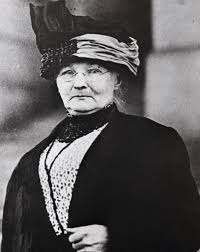
"My friends, it is solidarity of labor we want. We do not want to find fault with each other, but to solidify our forces and say to each other: we must be together; our masters are joined together and we must do the same thing." Mary Harris "Mother" Jones, union organizer and hell raiser, 1830?-1930.

June 06, 2018

Why we can't have nice things...and how to change that

Philip of Macedon.

People in positions of wealth and power have known the secret of keeping it since ancient times: divide and rule. That statement has been attributed to Phillip of Macedon (382-336 BC), father of Alexander the Great, as well as Julius Caesar (100-44 BC), but the idea was probably already old in their day.

The saddest thing, however, isn't that the rulers do it to us. It's that we do it to ourselves.

Let's look at some real and recent examples in the wake of West Virginia's historic and successful teachers' strike:

*some advocates for the poor were perplexed at the show of support for "middle class" teachers and the apparent lack of concern for those who were worse off.

*some education workers I know have said disparaging things about low-income people who rely on SNAP (food stamps) and Medicaid expansion, apparently not realizing that the same people who target poor people also target public education.

*some people who buy health coverage on the exchange at high prices or who have other poor and expensive insurance may look askance at people on PEIA, asking why tax dollars should be spent on health care for public workers.

And so it goes. Like crabs in a bucket, we pull each other down.

If you want to think of how this plays out on a grand scale over history, think about how people have been divided over race, ethnicity, religion, sex, national origin, etc. And who wins when this happens.

This is why we can't have nice things. So far. As Cassius said in Shakespeare's Julius Caesar,

 “The fault, dear Brutus, is not in our stars / But in ourselves, that we are underlings.”

Getting past that will require developing a culture of solidarity rather than division. It won't be easy, but I don't think there's any other way forward.

Once again, a bright spot can be found in the nationwide teachers' uprising that began right here in WV. When teachers flooded North Carolina's capitol in protest, their demands didn't just include raises for teachers and more funding for education. They also called for expanding Medicaid for low income North Carolinians.

Todd Warren, president of the Guilford County Association of Educators, was quoted in VICE News as saying, “We think that that's not only the correct and the moral thing to do, but as educators, our students' well-being and their literal health comes first.”

That's an example of the kinds of bridging that needs to happen if we're going to get out of the mess we're in.

April 05, 2018

This day in West Virginia labor history


On this day in 1989, the United Mine Workers of America (UMWA) began its historic strike against the Pittston Coal Company. The issues leading to the strike were mostly regarding retiree health benefits.

The union had been working without a contract for a full 14 months when the strike began, which was pretty much unheard of at the time. During that time many miners received training in nonviolent action and civil disobedience.

Around 1,700 miners in West Virginia, Virginia and Kentucky participated in the strike, which lasted until Feb. 20, 1990.

It was my first big fight. I had only been working on economic justice issues with the American Friends Service Committee for a month or so, although I followed events as closely as I could in the Charleston Gazette in the year leading up to it. Everybody paying attention knew something was going to blow.

I remember sitting in the cafeteria of the WV capitol and being told by a UMWA rep that it was starting as we spoke. It would come to absorb my attention, energy and chi for the next 10 months and I forged some strong relationships that continue to this day. I'll always be grateful to AFSC for giving me the chance to jump in. I can't say that I had a huge impact on the strike, but it had a huge impact on me.

It was intense and exhausting, but, to be honest, I was having the time of my life.

When I look back on it, I think of friends, picket lines, burning houses, evictions, crashing coal trucks, (alleged) jackrocks, singing, banter, jokes, learning guitar, anger, Christmas, courage, goon guards, provocations, state police, constant motion, solidarity, direct action, mischief, learning, absorbing history, brave women holding the line, places, and the threat of violence, all to a Bob Dylan soundtrack.

At times, the atmosphere on the picket lines reminded me of the movie Matewan just before the shootout. It seemed to me at the time as if the fate of the world, or at least the labor movement, hinged on the outcome. Eventually, the union won a restoration of benefits, which have helped thousands of retirees and survivors over the years. But UMWA membership continued to decline.

The strike developed in the aftermath of another less fortunate strike against Massey subsidiaries earlier in the decade. Like Pittston would later do, Massey withdrew from the Bituminous Coal Operators Association (BCOA), the industry bargaining group. This was the beginning of Massey's spree of union busting, environmental failures, intimidation, political manipulation, safety shortcuts and the rest.

Massey's power would grow over the years in power and influence, like the rising power of Mordor in The Lord of the Rings.

Ironically, Pittston withdrew from the coal industry in the years following the strike, with many of its assets sold to Massey.

Fast forward to this date in 2010, when a mammoth explosion at Massey's Upper Big Branch underground mine in Montcoal WV killed 29 miners. Before Massey bought the mine from Peabody Coal in 1993, it had been a union operation. But after a strong anti-union campaign led by former Massey CEO and now candidate for the US senate (!), the union was decertified by the late 1990s.

Without a union, miners had less of a voice in working conditions, and especially mine safety. With terrible consequences. You can read all about it here.

Much happened in the wake of the disaster. There were investigations, lawsuits, fines and criminal prosecutions, including the first ever conviction of the CEO of a major corporation for conspiring to evade safety rules. Massey no longer exists. But eight years later, the Republican controlled congress has yet to pass meaningful mine safety legislation, such as that advocated by the late great Senator Robert C. Byrd.

This day reminds me of the best and worst in West Virginia history, of what working people organized in unions can achieve and of what can happen if unions are weakened and defeated.

During WV's recent and successful teachers' strike, I felt echoes of Pittston days, with crowds at the capitol almost as large as the ones in 1989. And it was great to feel the warm presence of UMWA members rallying in solidarity.

Times have changed but our recent and more distant history shows that the need for working class solidarity is as urgent as ever. And that's not likely to change.


March 07, 2018

#55strong: counting the wins


(Nike, the Greek goddess of victory. No connection to overpriced sweatshop shoes.)

First of all, damn. I didn't see any of this coming two months ago.

I was expecting another brutal WV legislative session which would see more anti-worker legislation rammed through. Instead, we got a real peoples' uprising, a beautiful statewide work stoppage that showed amazing heart and solidarity and won some pretty miraculous victories. (Yes, I know some downer stuff happened too, but I'm not letting that spoil my day.)

So many victories, in fact, that it's hard to count them. Here's my partial list. Feel free to add to it:

Category: health insurance under the Public Employees Insurance Agency (PEIA). Several wins here, including

1. Taking away some hated changes;

2. Some extra funding;

3. A freeze in benefit changes for 17 months;

4. A task force charged with finding a long term fix.

Category: salary increases

5. A five percent increase for teachers and support workers, with an unexpected five percent for all state workers. This is amazing for several reasons. In recent years, the default setting for raises for teachers and public sector workers has been zero. Further several earlier proposals for increases were tiny.

Category: bad stuff that didn't happen

6. In January, it looked like a safe bet that a constitutional measure that would have cut business taxes on machinery and equipment by $140 million or so would pass. The proposed tax cuts were way more expensive than the raises (which some Republicans in the senate said "we" couldn't afford). All this despite the fact that one reason WV went in the whole was the previous round of unproductive business tax cuts. Any now, thanks to teachers and education workers, that didn't happen.

7. At the beginning of the session it looked like the legislature could ram through SB 335, the so called "Paycheck Protection Act," which in reality is more like the Paycheck Reduction Act. This measure would have hit organized teachers and public sector workers hard. Without these unions, none of these victories would have happened. Anyhow, it died a well deserved death.

8. Charter school legislation which would have undermined and drained resources away from public education died on the vine.

9. Threats to teacher seniority were defeated.

Category: intangible but priceless

10. This strike showed the world that the labor movement is alive and well--and not just in West Virginia.

11. The strike woke up lots of people who had not been involved in labor, legislative or policy advocacy before. It's too soon to tell, but it looks like it woke up a lot of people politically as well. It also clarified who the friends and opponents of working people are.

12. The strike showed people of all ages--and especially young people--in WV and beyond that people can accomplish great things if they stick together and act up. The fact that all this happened under horrible political circumstances makes it all the more amazing.

13. (Personal) It showed me that the true spirit of West Virginia hasn't died. For the last few years I've been afraid it had suffocated under a mountain of greed and lies.

Way to go, West Virginia--and thanks to everyone who played a role in this historic struggle!


February 27, 2018

Don't minimize your success!

This post is for all WV public employees who put themselves on the line in this struggle (which isn't over yet). I'm showing my age here, but this isn't the first big labor struggle I've seen, although it is one of the best. Here are a few thoughts from someone who has been in a few dozen fights:

1. First, give yourselves a pat on the back. Over a few weeks, you mobilized thousands of people of all ages to stand up for working people and actually get something out of it, even though it wasn't all we wanted. That used to happen here in decades past, but hasn't for a long time.Trust me on that one. Or ask any union worker.

2. I know a lot of folks out there may feel disappointed by where we are now. But one danger of social movements is that they often perceive failure when they've achieved considerable success. Think about where we stood even a month ago with PEIA premiums and Go365, not to mention raises.

3. Realize how bad things are for working people. I wish there was a nice way to say this but there isn't: the legislative majority is in the hands of enemies of working people. Period.  That's been the case for the last few years and it hasn't changed over the last few days. Other steps are needed to change that. To have gotten this far under these conditions is little short of amazing.

4. Our union brothers and sisters  have experienced agonizing defeats over the last two years while many of us weren't even paying attention. There are three kinds of unions: industrial, skilled trades (think construction); and public sector. Two out of three lost serious fights in the last few years. Industrial workers lost a huge one with the passage of so-called "right to work" legislation in 2016. Skilled trade workers lost another huge one with the repeal of prevailing wage for state construction projects. Public sector workers (teachers, school support workers and public employees) just won one, even though their legal status is weaker than other unions with the lack of collective bargaining.

5. Your actions helped kill or delay other bad legislation, including unproductive tax cuts and anti-worker bills, such as the "paycheck pilfering act."

6. The fight for justice is a marathon, not a sprint. Consider this: the first unfree African laborers were brought to what became the United States in 1619. The Emancipation Proclamation wasn't issued until 1863, the same year WV became a state. The Civil Rights Act wasn't passed until 1964. The Voting Rights Act wasn't passed until 1965. Lots of people died to get that far. Many other struggles, such as that for the right of women to vote, took decades to win. We did pretty good in less than a month.

7. No offense, but some people new to the struggle don't realize how badly the deck is stacked against working people and how much work in terms of education and organizing it will take to change that. We didn't lose this much ground overnight and won't gain it back that quickly either. Be proud to have gone as far as you did.

8. I suggest you resist the temptation to criticize your leaders. Let our enemies slander "union bosses" all they want, but the leaders of WVEA, WV-AFT and WVSSP are all former teachers and support workers. They have the hard and thankless job of trying to get the best they can for members in a bad situation. They could do a lot more if that situation changes, which will take mass mobilization by you.

9. It isn't over. The power you just used to shake the state to its foundation is always in your hands, provided we act together. People who have power don't own it; they only have it as long as people below cooperate with it. Withdraw that cooperation (strike!) and their power evaporates

10. Remember The Wizard of Oz. Dorothy thought she needed the wizard to get back home, but she had the power all along. That power is the power that comes when working people act together. Remember the last verse of the WV-inspired labor song "Solidarity Forever:"

"In our hands is placed a power greater than their hoarded gold
greater than the might of armies magnified a thousand fold
We can bring to birth a new world from the ashes of the old
while the union makes us strong."


February 19, 2018

The die is cast


As a classics geek, I can't help but remember that when Julius Caesar crossed the Rubicon river on his way to Rome to take on the aristocratic party, he said "The die is cast."  Today, we might say "the dice have been rolled." Or just "It's on."

That seems to me to be where teachers and public employees are now unless there is positive action soon at the legislature, which doesn't seem likely.

That probably means that there will be a lot of voices, some from people we know and some that almost seem to  make sense, urging people to step back and/or give in before Thursday's action.

But it seems clear to me that the decision to act wasn't made lightly. People have been consulted statewide and votes have been taken. Waffling now would likely be seen as a sign of weakness.  What's needed now is a strong showing of strength and solidarity.

The die is cast. Or, if you prefer, it's on.

February 04, 2018

Solidarity forever--and today

I have fond memories of the 1990 West Virginia teachers' strike. I was still new to working on social justice issues for the American Friends Service Committee. My first big adventure was supporting coal miners and their families in the Pittston Coal Strike, which lasted from April 5 1989 until Feb. 20, 1990.

I was kind of going through picket line withdrawal at the time and thought it was awfully nice of state teachers to help me out. Seriously though, teacher pay and morale at the time were rock bottom. The strike wasn't called by any unions; rather it grew like wildfire starting in the southern West Virginia coalfields. And it worked, with major gains for teachers.

(My fondest memory is of my late mother, who had just retired from teaching. She was boiling mad that our county hadn't walked out and asked me to bring up some union coal miners to picket and shut things down. I thought it was a great idea and got on the case but the teachers  wound up settling the strike before that could be arranged. I guess you can't have everything.)

 There could be some deja vu going on here, asWV Gazette-Mail reporter Phil Kabler wrote in today's paper.

Even while Republican legislators claim "we" can't afford a decent raise for teachers or a fix to ever increasing PEIA insurance costs, they are pushing a $140 million tax cut for some (mostly out of state) businesses. That would be more than enough to do the right thing. The business  tax cuts would come on top of cuts of over $200 million per year enacted 10 years ago, not to mention the Trump #taxscam tax cuts recently passed by congress.

I guess you could say it's "which side are you on?" time.While we're on the subject of Appalachian labor songs, you can give a listen to Solidarity Forever, the international anthem of the labor movement, which was inspired by events right here just over 100 years ago.

Anyhow, then as now, I stand in solidarity with our teachers. Obviously.

 And I'm grateful that they are showing some of that fighting spirit that once animated West Virginia.