
In fall 2001, I taught a sociology class at WVU-Tech. The semester had barely started when the 9/11 terrorist attacks shook the world.
That prompted me to look at the social science of how and why people can be cruel to each other. A good resource was social psychologist Roy F. Baumeister’s 1997 study, “Evil: Inside Human Violence and Cruelty.”
According to Baumeister, “Evil requires the deliberate actions of one person, the suffering of another, and the perception or judgment of either the second person or an observer. Very few people see their own actions as evil ...”
Since evil is largely in the eye of the beholder, victims and perpetrators have vastly different perspectives on it. For the latter, it’s usually “not that big a deal,” while to the victim it’s a huge deal. Baumeister calls this difference the “magnitude gap,” and it’s one reason why acts of revenge are often out of proportion to the original offense. Violence is often a spiral, not a cycle.
One thing that keeps us from understanding evil and dealing with it is what he calls “the myth of pure evil,” which we pick up from sources such as myths, comic books, action movies, etc.
According to this, evil involves the intentional infliction of harm for the pleasure of doing it. Victims are all innocent and good, and perpetrators are all evil. Evil is always “the other, the enemy, the outsider, the out-group.”
One problem with this is that, in any given war or conflict, both sides see each other in terms of the myth. Perpetrators usually see themselves as victims.
According to Baumeister, “the myth of pure evil conceals the reciprocal causality of violence. By doing so, it probably increases the violence. The myth of pure evil depicts innocent victims fighting against gratuitously wicked, sadistic enemies. The myth encourages people to believe that they are good and will remain good no matter what, even if they perpetrate severe harm on their opponents. Thus, the myth of pure evil confers a kind of moral immunity on people who believe in it ... belief in the myth is itself one recipe for evil, because it allows people to justify violent and oppressive actions. It allows evil to masquerade as good.”
Baumeister identified four types of evil: instrumental, egotism/revenge, idealism and sadism. Fortunately, sadism — cruelty for the fun of it — is the rarest form. Most people don’t enjoy inflicting harm on others, although it gets easier with repetition. It appears to be an acquired taste, with some of the same mechanisms of addiction.
Far more common is instrumental evil, i.e., doing harm to gain other ends, such as money or power. Examples could include killing or hurting someone for money, organized crime, a government that mistreats people to keep power, etc.
His view of egotism and revenge challenges common assumptions. It’s often asserted that harm is committed by people with low self-esteem. He suggests, rather, that many violent individuals, groups, political movements and countries have high but fragile self-esteem and lash out violently whenever this is challenged:
“The people (or groups or countries) most prone to violence are the ones who are most susceptible to ego threats, especially those who have inflated, exalted opinions of themselves or whose normally high self-esteem does occasionally take a nosedive.”
Wounded egotism usually seeks a revenge that is entirely out of proportion to the original offense.
Then there’s the violence of idealism and true believers. As Bob Dylan said, “you don’t count the dead when God’s on your side.” When people think they are on the side of good and their enemies are evil, they feel morally justified in using extreme violence and cruelty.
“Human nature inclines people to align themselves in groups that square off against each other, each group seeing itself as good and the other as bad. Group competition can evolve into brutal conflict in which each side sincerely sees itself as the good guys who need to take strong measures to defeat the forces of evil that oppose them.”
Evil doesn’t generally appear all at once in fully developed form. It starts with a loss of self- or social control. “Many instances of profound evil begin with a small, ambiguous act that crosses a fuzzy line and then escalates gradually into even greater levels of violence.”
For example, the Ku Klux Klan began with a group of bored young men seeking amusement by mischief and practical jokes. The Nazi holocaust came at the end of a long progression of gradually escalating abuses. Often, Nazi leaders would pause at each stage to gauge world reaction before escalating violence.
Groups can be especially dangerous, because, in them, “evil escalates as the members bring out one another’s worst impulses, lose track of individual responsibility and reinforce one another’s wavering faith in the broad justifications for what they are doing.”
There’s no magic bullet to make evil go away, but understanding it is a good first step, and Baumeister’s work is a good place to start. He argues that bystanders can have a huge effect and “a responsibility to protest evil, because it will grow unchecked if they do not ... the victims of evil and violence depend on bystanders to bear witness to what is happening and take a stand against it. It is the only way.”
(This ran as an op-ed in the Charleston Gazette-Mail).
Showing posts with label evil. Show all posts
Showing posts with label evil. Show all posts
July 30, 2019

September 26, 2017
Gazing into the abyss

Too bad this is a dangerous illusion.
As Aleksandr Solzhenitsyn put it in “The Gulag Archipelago,” his study of Soviet punishment camps:
“If only there were evil people somewhere insidiously committing evil deeds, and it were necessary only to separate them from the rest of us and destroy them. But the line dividing good and evil cuts through the heart of every human being. ... During the life of any heart this line keeps changing place; sometimes it is squeezed one way by exuberant evil and sometimes it shifts to allow enough space for good to flourish.
“One and the same human being is, at various ages, under various circumstances, a totally different human being. At times he is close to being a devil, at times to sainthood.”
He quotes a Russian proverb that, “From good to evil is one quaver,” noting it works the other way, too.
That’s a good summary of social science on how ordinarily good people sometimes do terrible things.
Someone who explored this field for decades is Philip Zimbardo, creator of the infamous Stanford Prison experiment and author of “The Lucifer Effect: How Good People Turn Evil.”
He argues that we tend to attribute evil actions to the individual dispositions of people who do them but ignore the powerful forces situations exert on individuals. Further, powerful people create systems that put decent people in situations in which they do things they otherwise never would have.
He warns that we often have a dangerously inflated notion of our ability to resist evil influences.
“For many, that belief of personal power to resist powerful situational and systemic forces is little more than a reassuring illusion of invulnerability,” he wroted. “Paradoxically, maintaining that illusion only serves to make one more vulnerable to manipulation by failing to be sufficiently vigilant against attempts of undesired influence subtly practiced on them.”
Two powerful toxins that can unleash the beast in any of us are dehumanization and deindividuation.
Zimbardo: “Dehumanization is one of the central processes in the transformation of ordinary, normal people into indifferent or even wanton perpetrators of evil. Dehumanization is like a cortical cataract that clouds one’s thinking and fosters the perception that other people are less than human. It makes some people come to see those others as enemies deserving of torment, torture, and annihilation.”
Dehumanization happens at an individual level, but it is most dangerous when the powerful create systems that label and target some groups as being less than human.
When we dehumanize others, another process that kicks in is what social psychologist Albert Bandura called “moral disengagement,” when we convince ourselves that some people are unworthy of empathy and compassion.
Then it’s on.
Deindividuation happens when we identify so closely with a group that we lose our sense of individual responsibility. This happens in organized or informal ways. When countries send people off to war, the warriors are often deindividualized with shaved heads, uniforms and drills that emphasize following orders and acting as a unit. It can also happen in informal groups like mobs and gangs. Things like masks and hoods can add to the effect.
This is most dangerous at the systemic level, particularly when it goes hand in hand with dehumanizing some vulnerable group via ideology and propaganda. Throw in our tendency to conform and obey authority, and you have a pretty lethal brew. Signals from above give permission to abuse those below.
The scary side to group behavior has long been recognized. Sigmund Freud noted that, in groups, emotionalism rises while rationality falls (think political rallies, rock concerts, some sporting events).
He believed that when groups fall under the spell of a charismatic authority, the people in it regress to a more primitive mental state. He wrote, “It is not so remarkable that we should see an individual in a group doing or approving things which he would have avoided in the normal conditions of life.”
The theologian Reinhold Niebuhr even titled one of his books “Moral Man and Immoral Society.” He didn’t have any delusions about the flaws of individuals, but rather noted that, “In every human group there is less reason to guide and to check impulse, less capacity for self-transcendence, less ability to comprehend the needs of others and therefore more unrestrained egoism than the individuals, who compose the group, reveal in their personal relationships.”
After all, most individuals have consciences. But often the conscience of a group is a dissenting minority accused of disloyalty.
We live in are dangerous times. Polarization runs high. There are calls for dehumanization coming from high places around the world. America may be on its own dark journey, although it’s unclear how far it will go. I’m consoled by the thought that many other nations have gone through dark times and come out on the other side.
I hope we step back from the edge of the cliff and resist the temptation to see the other, whoever it may be, as some kind of monster.
As the German philosopher Friedrich Nietzsche said, “Whoever fights monsters should see to it that in the process he does not become a monster. And if you gaze long enough into an abyss, the abyss will gaze back into you.”
(This ran as an op-ed in the Gazette-Mail a day or so ago.)
December 31, 2015
Oracles
I have a friend and former co-worker I haven't seen in years. Back in the day when we'd get together for work gatherings, we'd bust out a guitar or two and wail far into the night. My friend was a veritable jukebox capable of playing anything from revolutionary anthems to "Hang on, Sloopy."
He'd spent several years as a political prisoner in the Philippines and I think that's where he expanded his playlist.
I loved it when sometimes after playing a song, he'd get this faraway look in his eyes and make some brief oracular statement about the inner meaning of the song. If memory serves, after "Space Oddity," he paused and said "It's about alienation."
Once, after tearing through "The Man Who Sold the World," he mused "It's about the triumph of evil." I remember almost getting a chill when he said that.
For some reason, his oracles are on my mind going into 2016. I have a feeling 2016 is going to have more than it's share of alienation and the triumph of evil, in West Virginia and around the world.
I wish I'm wrong about that.
He'd spent several years as a political prisoner in the Philippines and I think that's where he expanded his playlist.
I loved it when sometimes after playing a song, he'd get this faraway look in his eyes and make some brief oracular statement about the inner meaning of the song. If memory serves, after "Space Oddity," he paused and said "It's about alienation."
Once, after tearing through "The Man Who Sold the World," he mused "It's about the triumph of evil." I remember almost getting a chill when he said that.
For some reason, his oracles are on my mind going into 2016. I have a feeling 2016 is going to have more than it's share of alienation and the triumph of evil, in West Virginia and around the world.
I wish I'm wrong about that.
August 18, 2015
Thoughts on evil, Iran and the nuclear deal
This op-ed of mine ran in today's Charleston Gazette-Mail:
I’ve become fascinated with what might be called the science of evil, or what research tells us about violence, cruelty and conflict.
I’m not personally into all that myself (most days anyway), but I think the more we learn about such things, the better will be our chances for reducing them. After all, medicine wouldn’t have gotten very far if it didn’t study diseases and injuries.
It turns out that the science of evil has a lot to teach us. Psychologists like Solomon Asch, Stanley Milgram and Philip Zimbardo have shown how normal people can be induced to do things they otherwise wouldn’t through pressures of conformity, obedience to authority, and social situations and systems.
I’ve been particularly struck by the research of Roy Baumeister, whose book “Evil: Inside Human Violence and Cruelty” I discovered in the wake of 9/11.
According to Baumeister, “Evil requires the deliberate actions of one person, the suffering of another, and the perception or judgment of either the second person or an observer. Very few people see their own actions as evil ... ”
Victims and perpetrators generally have vastly different perspectives on the acts in question. For perpetrators, the actions in question usually aren’t a big deal, while to the victims they are a very big deal indeed. In fact, perpetrators, even very violent ones, often see themselves as victims and see their victims as perpetrators. Evil, Baumeister maintains, is in the eye of the beholder.
Baumeister calls this difference in perspective between victims and perpetrators the “magnitude gap,” and it is one reason why acts of revenge are often out of proportion to the original offence. This is why violence often doesn’t cycle — it spirals.
One thing that keeps us from understanding evil and dealing with it is what he calls “the myth of pure evil,” which most of us pick up from sources such as myths, comic books, action movies, etc.
According to the myth, evil involves the intentional infliction of harm for the pleasure of doing it. Victims are all innocent and good and perpetrators are all evil. Evil is always “the other, the enemy, the outsider, the out-group.” It has always been around and always will be; it is the enemy of order, peace and stability. We’re all good; the “enemy” is all bad.
One problem with seeing the world in this way is that in any serious conflict, both sides see each other in terms of the myth, which makes it harder to de-escalate a potentially violent situation.
According to Baumeister, “the myth of pure evil conceals the reciprocal causality of violence. By doing so, it probably increases the violence. The myth of pure evil depicts innocent victims fighting against gratuitously wicked, sadistic enemies. The myth encourages people to believe that they are good and will remain good no matter what, even if they perpetrate severe harm on their opponents. Thus, the myth of pure evil confers a kind of moral immunity on people who believe in it ... belief in the myth is itself one recipe for evil, because it allows people to justify violent and oppressive actions. It allows evil to masquerade as good.”
As Bob Dylan sang, “You don’t count the dead when God’s on your side.”
To use a fairly recent real life example of the danger of the myth of pure evil in action, shortly after 9/11, then President George Bush promised to “rid the world of evil-doers.”
That didn’t happen, as you may have noticed.
Instead, he led the country to an unnecessary war in Iraq (which had nothing to do with 9/11) that cost nearly 4,500 American fatalities and over 30,000 non-fatal U.S. casualties in addition to an Iraqi death toll somewhere in the hundreds of thousands, depending on the estimate. Not to mention a trillion or so in wasted money that could better have been spent or invested elsewhere.
I hope we can avoid that kind of outcome in the case of Iran. True, the U.S. and that country have glared at each other since the Iranian revolution of 1979, each seeing evil in the other.
Many in the U.S. see in Iran a repressive regime which seized American hostages, supports terrorism, pursues nuclear weapons, and threatens our allies. Many Iranians see the U.S. as an imperial nuclear power that helped overthrow their democratically elected government in 1953, installed the Shah’s repressive regime, aided Saddam Hussein’s Iraq in the Iran-Iraq war of the 1980s, and invades Muslim countries on flimsy pretexts.
That kind of mirror-imaging could be a recipe for international disaster. Fortunately, the United States, Britain, France, China, Russia and Germany have reached a deal with Iran that would prevent that country from developing nuclear weapons; shrink its nuclear program; allow for inspections; and reduce the likelihood of another disastrous war in the Middle East. Without a deal, the inspections and restrictions on Iran’s nuclear program go out the window.
No deal is perfect and this one doesn’t resolve all the issues or differences between the U.S. and Iran. It probably won’t bring about the Peaceable Kingdom right away. But it is a step in the right direction.
Congress has to vote on the measure in September. Bluster and tough talk are cheap and plentiful these days, but I hope some — or at least one — of West Virginia’s leaders will have the courage — and common sense — to support diplomacy and avert another avoidable disaster.
I’ve become fascinated with what might be called the science of evil, or what research tells us about violence, cruelty and conflict.
I’m not personally into all that myself (most days anyway), but I think the more we learn about such things, the better will be our chances for reducing them. After all, medicine wouldn’t have gotten very far if it didn’t study diseases and injuries.
It turns out that the science of evil has a lot to teach us. Psychologists like Solomon Asch, Stanley Milgram and Philip Zimbardo have shown how normal people can be induced to do things they otherwise wouldn’t through pressures of conformity, obedience to authority, and social situations and systems.
I’ve been particularly struck by the research of Roy Baumeister, whose book “Evil: Inside Human Violence and Cruelty” I discovered in the wake of 9/11.
According to Baumeister, “Evil requires the deliberate actions of one person, the suffering of another, and the perception or judgment of either the second person or an observer. Very few people see their own actions as evil ... ”
Victims and perpetrators generally have vastly different perspectives on the acts in question. For perpetrators, the actions in question usually aren’t a big deal, while to the victims they are a very big deal indeed. In fact, perpetrators, even very violent ones, often see themselves as victims and see their victims as perpetrators. Evil, Baumeister maintains, is in the eye of the beholder.
Baumeister calls this difference in perspective between victims and perpetrators the “magnitude gap,” and it is one reason why acts of revenge are often out of proportion to the original offence. This is why violence often doesn’t cycle — it spirals.
One thing that keeps us from understanding evil and dealing with it is what he calls “the myth of pure evil,” which most of us pick up from sources such as myths, comic books, action movies, etc.
According to the myth, evil involves the intentional infliction of harm for the pleasure of doing it. Victims are all innocent and good and perpetrators are all evil. Evil is always “the other, the enemy, the outsider, the out-group.” It has always been around and always will be; it is the enemy of order, peace and stability. We’re all good; the “enemy” is all bad.
One problem with seeing the world in this way is that in any serious conflict, both sides see each other in terms of the myth, which makes it harder to de-escalate a potentially violent situation.
According to Baumeister, “the myth of pure evil conceals the reciprocal causality of violence. By doing so, it probably increases the violence. The myth of pure evil depicts innocent victims fighting against gratuitously wicked, sadistic enemies. The myth encourages people to believe that they are good and will remain good no matter what, even if they perpetrate severe harm on their opponents. Thus, the myth of pure evil confers a kind of moral immunity on people who believe in it ... belief in the myth is itself one recipe for evil, because it allows people to justify violent and oppressive actions. It allows evil to masquerade as good.”
As Bob Dylan sang, “You don’t count the dead when God’s on your side.”
To use a fairly recent real life example of the danger of the myth of pure evil in action, shortly after 9/11, then President George Bush promised to “rid the world of evil-doers.”
That didn’t happen, as you may have noticed.
Instead, he led the country to an unnecessary war in Iraq (which had nothing to do with 9/11) that cost nearly 4,500 American fatalities and over 30,000 non-fatal U.S. casualties in addition to an Iraqi death toll somewhere in the hundreds of thousands, depending on the estimate. Not to mention a trillion or so in wasted money that could better have been spent or invested elsewhere.
I hope we can avoid that kind of outcome in the case of Iran. True, the U.S. and that country have glared at each other since the Iranian revolution of 1979, each seeing evil in the other.
Many in the U.S. see in Iran a repressive regime which seized American hostages, supports terrorism, pursues nuclear weapons, and threatens our allies. Many Iranians see the U.S. as an imperial nuclear power that helped overthrow their democratically elected government in 1953, installed the Shah’s repressive regime, aided Saddam Hussein’s Iraq in the Iran-Iraq war of the 1980s, and invades Muslim countries on flimsy pretexts.
That kind of mirror-imaging could be a recipe for international disaster. Fortunately, the United States, Britain, France, China, Russia and Germany have reached a deal with Iran that would prevent that country from developing nuclear weapons; shrink its nuclear program; allow for inspections; and reduce the likelihood of another disastrous war in the Middle East. Without a deal, the inspections and restrictions on Iran’s nuclear program go out the window.
No deal is perfect and this one doesn’t resolve all the issues or differences between the U.S. and Iran. It probably won’t bring about the Peaceable Kingdom right away. But it is a step in the right direction.
Congress has to vote on the measure in September. Bluster and tough talk are cheap and plentiful these days, but I hope some — or at least one — of West Virginia’s leaders will have the courage — and common sense — to support diplomacy and avert another avoidable disaster.
October 07, 2014
The line cuts through the heart
I've read a lot over the years about the atrocities committed in Stalinist Russia, but I'm only just now getting around to reading (really listening to an unabridged recording of) Solzhenitsyn's Gulag Archipelago.
This morning, while walking the dogs in the rain, I came across this nugget that says a lot about human nature:
This morning, while walking the dogs in the rain, I came across this nugget that says a lot about human nature:
If only there were evil people somewhere insidiously committing evil deeds, and it were necessary only to separate them from the rest of us and destroy them. But the line dividing good and evil cuts through the heart of every human being. And who is willing to destroy a piece of his own heart?
During the life of any heart this line keeps changing place; sometimes it is squeezed one way by exuberant evil and sometimes it shifts to allow enough space for good t flourish. One and the same human being is, at various ages, under various circumstances, a totally different human being. At times he is close to being a devil, at times to sainthood. But his name doesn't change, and to that name we ascribe the whole lot, good and evil.
Socrates taught us: "Know thyself."
Confronted by the pit into which we are about to toss those who have done us harm, we halt, striken dumb; it is after all only because of the way things worked out that they were the executioners and we weren't.
From good to evil is one quaver, says the proverb.
And correspondingly, from evil to good.
March 18, 2013
Out of the same spirit
There's an old joke about a Zen master walking up to a hot dog stand and saying "Make me one with everything." I think Ralph Waldo Emerson would take his hot dogs that way too, metaphorically speaking.
I've been blogging lately about Emerson and his ideas and at the moment I'm on his Harvard Divinity School Address. In it, among other things, he embraces a kind of cosmic idealistic monism (as in all is one) and thus seems to suffer from the kind of over optimism that characterizes such world views.
Here he lays it out:
10 YEARS OUT. Here's Krugman on the Iraq War anniversary.
WAR ON COAL? Here's another view.
ANIMAL RESURRECTIONS. Given cloning and all, which extinct animals would you bring back?
GOAT ROPE ADVISORY LEVEL: ELEVATED
I've been blogging lately about Emerson and his ideas and at the moment I'm on his Harvard Divinity School Address. In it, among other things, he embraces a kind of cosmic idealistic monism (as in all is one) and thus seems to suffer from the kind of over optimism that characterizes such world views.
Here he lays it out:
...the world is not the product of manifold power but of one will, of one mind; and that one mind is everywhere active, in each ray of the star, in each wavelet of the pool; and whatever opposes that will is everywhere balked and baffled, because things are made so, and not otherwise.He adopts a position on evil that goes back to St. Augustine and Plato, which views being as such as good and evil as merely the absence of good:
Good is positive. Evil is merely privative, not absolute: it is like cold which is the privation of heat. All evil is so much death or nonentity. Benevolence is absolute and real. So much benevolence as a man hath, so much life hath he. For all things proceed out of this same spirit, which is differently named love, justice, temperance, in different applications, just as the ocean receives different names no the several shores which it washes. All things proceed out of the same spirit, and all things conspire with it. Whilst a man seeks good ends, he is strong by the whole strength of nature. In so far as he roves from these ends, he bereaves himself of power, of auxiliaries; his being shrinks out of all remote channels, he become less and less, a mote, a point, until absolute badness is absolute death.Let those who can believe it. As far as I can, some of those motes and points can do quite a bit of damage.
10 YEARS OUT. Here's Krugman on the Iraq War anniversary.
WAR ON COAL? Here's another view.
ANIMAL RESURRECTIONS. Given cloning and all, which extinct animals would you bring back?
GOAT ROPE ADVISORY LEVEL: ELEVATED
July 16, 2012
A textbook case
A few years back, I did a series here on Stanford psychologist Philip Zimbardo's study of evil, The Lucifer Effect (search in corner of blog for more). People--especially people in power--tend to blame evil actions on the disposition of the perpetrator. Zimbardo's research and that of many other scientists has shown that situations and the systems that sustain them are the real vectors of evil.
I couldn't help but be reminded of his work when I read this article about the football uber alles culture of Penn State and the backlash against a woman who tried to stand up to it. It's a good example of how evil spreads and grows. Note: it usually starts pretty small and doesn't see itself as evil.
OK, I'M STILL DOWN WITH ZOMBIE FEVER, but here's an encouraging link about how people in the eastern panhandle of WV are protesting Governor Tomblin's child care cuts. Let there be more.
I couldn't help but be reminded of his work when I read this article about the football uber alles culture of Penn State and the backlash against a woman who tried to stand up to it. It's a good example of how evil spreads and grows. Note: it usually starts pretty small and doesn't see itself as evil.
OK, I'M STILL DOWN WITH ZOMBIE FEVER, but here's an encouraging link about how people in the eastern panhandle of WV are protesting Governor Tomblin's child care cuts. Let there be more.
September 22, 2011
Unspectacular and always human
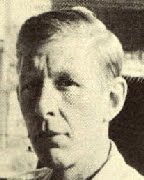
"Evil is unspectacular and always human, and shares our bed and eats at our own table."--W. H. Auden
GET BUSY. Here's a "Move the Money" toolkit from AFSC about how to get involved in working for a sane federal budget
CLASS WARFARE? Elizabeth Warren rather forcefully whacks that notion here.
ONE TO WATCH. Here's a new website that aims to be a resource for state and national acting to promote shared prosperity. The name of the site says it all: buildingthemiddleclass.org.
FOR ADULTS ONLY. Wild (but probably not very hot) squid sex is discussed here.
GOAT ROPE ADVISORY LEVEL: ELEVATED
April 01, 2011
Going bad

I've been blogging lately about Tolkien's The Lord of the Rings as a work of social realism that has a lot to say about working for social justice. This is installment #5.
In Philip Zimbardo's fascinating book on human evil, The Lucifer Effect, the author examines the many different ways otherwise good people can be induced to cross a line that is hard to see at first. In chapter 12 of that work, he quotes C.S. Lewis about the human desire to be part of the in crowd, the powerful set:
I believe that in all men's lives at certain periods, and in many men's lives at all periods between infancy and extreme old age, one of the most dominant elements is the desire to be inside the local Ring and the terror of being left outside...Of all the passions the passion for the Inner Ring is most skilful in making a man who is not yet a very bad man do very bad things.
Zimbardo writes that
a powerful force in transforming human behavior, pushing people across the boundary between good and evil, comes from the basic desire to be "in" and not "out." If we think of social power as arrayed in a set of concentric circles from the most powerful central or inner ring moving outward to the least socially significant outer ring, we can appreciate his focus on the centripetal pull of that central circle.In LOTR, we see this happening in the case of the wizard Saruman, who started out as leader of the Wise but is drawn to the power of Sauron the Dark Lord. Saruman tells Gandalf
A new Power is rising. Against it the old allies and policies will not avail us at all. There is no hope left in Elves or dying Numenor. This then is the one choice before you, before us. We may join with that Power. It would be wise, Gandalf. There is hope that way. Its victory is at hand; and there will be rich reward for those that aided it. As the Power grows, its proved friends will also grow; and the Wise, such as you and I, may with patience come at last to direct its courses, to control it. We can bide our time, we can keep our thoughts in our hearts, deploring maybe evils done by the way, but approving the high and ultimate purpose: Knowledge, Rule, Order; all the things we have so far striven in vain to accomplish, hindered rather than helped by our weak or idle friends. There need not be, there would not be, any real change in our designs, only in means.
In other words, he wants to be one of the big dogs at the center of things. Sure, he may not go along with all of it, but he might have a chance here or there to make some things happen, all the while telling himself he isn't really changing. It sounds like an ambitious person today going to work for a powerful politician or a major CEO.
That's a well-trod path, unfortunately.
ZOMBIE ECONOMICS is alive and well.
BASEBALL SEASON just started. Here's economist Dean Baker going to bat for Social Security.
ANOTHER MEASURE. What does it really take to be (fairly) economically self-sufficient?
FRESH FIGS. Here is the latest edition of the Rev. Jim Lewis' Notes from Under the Fig Tree.
IRAQ. It isn't even safe to breathe there.
GOAT ROPE ADVISORY LEVEL: ELEVATED
August 25, 2010
Malthus, population and politics

A member of the "surplus population" breaks stones in a Victorian workhouse.
I've been musing on Darwinian themes here lately. If you like that kind of thing click on earlier posts.
Charles Darwin derived his idea of evolution by means of natural selection from Thomas Malthus' An Essay on the Principle of Population. The irony is that Malthus wrote it about humans and was mostly wrong and that Darwin applied to to the natural world and it was mostly right.
Moving from science to politics, Victorian era conservatives loved Malthus. They took his argument to mean that if workers got better wages, they'd only have more kids, for which there wouldn't be enough to go around, which would make them worse off than they were before. Give them jails and workhouses instead!
That has pretty much set the pattern for most arguments on the right against most progressive policy measures: anything that is aimed at helping poor folks would only hurt them, so the best way to really help them is to stick it to them.
Malthus turned out to be wrong about humans, at least for the period of the industrial era into our own. Advances in science and technology in the period since 1800 have made possible an expansion of population and an improvement in living standards for many people. And people tend to have fewer children as living standards rise and children are more likely to live to maturity, which is known as demographic transition.
In the modern world, hunger and starvation are more matters of politics than of population as such, more about distribution than demographics--although that might not always be the case in the future as we stress the environment and push the limits of the earth's carrying capacity.
EVIL, DANTE AND ALL THAT. Here's a shout out to a friend and fellow WV blogger over at Esse Diem for a post about the science of evil, a perennial favorite topic of El Cabrero.
ONE OUT OF FIVE AMERICANS believe some strange stuff.
SO MUCH FOR SUPPLY SIDE ECONOMICS. We have a problem with demand.
UPPER BIG BRANCH. The first settlements have been reached in wrongful death lawsuits as a result of Massey Energy's Upper Big Branch mine disaster, as Ken Ward reports in today's Gazette.
GOAT ROPE ADVISORY LEVEL: ELEVATED
July 23, 2008
MORAL LUCK

Image courtesy of wikipedia.
El Cabrero is fascinated by the idea of "moral luck." It's an idea that was first developed by philosopher Bernard Williams and later elaborated by Thomas Nagel.
I think it works something like this: We tend to praise or blame people for doing or not doing certain things as if the whole thing was up to the individuals in question. But in the real world, what people do or don't do is often as much a matter of chance and circumstances as choice.
Take the example of a soldier who commits atrocities in a war. Would he or she have done the same thing if a war never happened? Or what if people who supported a dictatorship and did bad things in its service happened to be born in a different country or under a different political system?
People who talk about moral luck often use the example of a car accident. Most of us have probably zoned out at a stop sign or two or neglected to obey a speed limit sign. Driver X runs a light and nothing happens, while when Driver Y does it, innocent people are killed. Both are blameworthy for not paying attention, but the results are vastly different. We tend to blame Driver Y more, but both their actions were the same. The main difference is luck.
All El Cabrero knows is that the main reason I didn't get into a lot more trouble as a kid than I did had more to do with luck than anything else. Virtue is often a matter of chance and opportunity.
Although he doesn't use the term "moral luck," Stanford social psychologist Philip Zimbardo (of Stanford Prison Experiment fame) sums it up pretty well in his book The Lucifer Effect:
If you were placed in a strange and novel cruel Situation within a powerful System, you would probably not emerge as the same person who entered that crucible of human nature. You would not recognize your familiar image if it were held next to the mirror image of what you had become. We all want to believe in our inner power, our sense of personal agency, to resist external situational forces... For some, that belief is valid. They are usually the minority, the rare bird, those who I will designate as heroic... For many, that belief of personal power to resist powerful situational and systemic forces is little more than a reassuring illusion of invulnerability. Paradoxically, maintaining that illusion only serves to make one more vulnerable to manipulation by failing to be sufficiently vigilant against attempts of undesired influence subtly practice on them.
So good luck!
GET HAPPY. As more economists and social scientists research the link or lack thereof between conventional economics and human happiness, some free market fundamentalists are getting nervous.
BUBBLE, BUBBLE, TOIL AND TROUBLE. Here's progressive economist Jared Bernstein on "the shampoo economy."
LOCAL FOODS, LAZY OR NOT. Here's another dispatch from the growing (no pun intended) movement to consume more local food.
SPEAKING OF WHICH, food banks around the country are increasing leaning on gleanings from local farms.
WELFARE FOR THE RICH was the subject of a talk by David Cay Johnston in WV last night.
GOAT ROPE ADVISORY LEVEL: ELEVATED
July 21, 2008
LESSONS LEARNED?

Salem witch trial, courtesy of wikipedia.
It would be nice to think that people who have experienced violence, oppression or discrimination would ever thereafter sympathize with people in similar situations. Sometimes it works out that way, but it could just as easily have the opposite effect.
El Cabrero has often shown the PBS documentary A Class Divided to sociology classes and other groups. It showed how elementary school teacher Jane Elliot tried to teach a group of white children what discrimination was like by segregating them on the basis of eye color. One day students with blue eyes are given top status and extra privileges, while the brown eyed students were marginalized.
On the next day, the roles were switched. One might hope that those who had been unfairly treated would refuse to treat others in the same way.
Not a chance. They couldn't wait to claim top status. It was only after a period of debriefing that students could begin to process the experience and learn from it.
Psychologist Philip Zimbardo in The Lucifer Effect: Understanding How Good People Turn Evil puts it like this:
...what are the deeper lessons to be learned from such situations? Admire power; detest weakness. Dominate, don't negotiate. Hit first when they turn the other cheek. The golden rule is for them, not us. Authority rules, rules are authority.
These are also some of the lessons learned by boys of abusive fathers, half of whom are transformed into abusive fathers themselves, abusing their children, spouses, and parents. Perhaps half of them identify with the aggressor and perpetuate his violence, while others learn to identify with the abused and reject aggression for compassion. However, research does not help us to predict which abused kids will later become abusers and which will turn out to be compassionate adults.
Thus it is that in history the children of the oppressed can quickly become the oppressors and persecuted groups sometimes persecute others in kind when the opportunity occurs.
DEEP IN DEBT. The NY Times had an interesting item about the nation's debt crisis. Here's an excerpt:
Just two generations ago, America was a nation of mostly thrifty people living within their means, even setting money aside for unforeseen expenses.
Today, Americans carry $2.56 trillion in consumer debt, up 22 percent since 2000 alone, according to the Federal Reserve Board. The average household’s credit card debt is $8,565, up almost 15 percent from 2000.
College debt has more than doubled since 1995. The average student emerges from college carrying $20,000 in educational debt.
Household debt, including mortgages and credit cards, represents 19 percent of household assets, according to the Fed, compared with 13 percent in 1980
SELF HELP NATION. Also from the Times, here's an entertaining item about the burgeoning self help publishing industry.
OPPOSING THE NEXT WAR. People around the country are mobilizing to prevent a possible war with Iran.
STATE OF THE UNION. A new book makes the case for how labor unions strengthen working families. But the author says we need to help the general public connect the dots.
GOAT ROPE ADVISORY LEVEL: ELEVATED
July 18, 2008
SHUTTING OFF THE MORALITY SWITCH

Beelzebub, "Lord of the Flies," from Beelzebub as depicted in Collin de Plancy's Dictionnaire Infernal. Image courtesy of wikipedia.
The theme at Goat Rope lately is what the social sciences can tell us about human cruelty and violence. If this is your first visit, please click on earlier posts.
As mentioned yesterday, social psychologist Albert Bandura's research indicates that most people have a sense of morality that includes not doing bad things to others and helping them out when they need it. To repeat, that's the good news. The bad news is that we're pretty good at shutting morality down under certain conditions. He called this "moral disengagement."
Two ways of doing this that were discussed yesterday were redefining the situation and using euphemisms. But there are other ways as well. They include:
*advantageous comparison. "We didn't do bad stuff and if we did, it wasn't as bad as what the other guys do."
*displacement of responsibility. "...and besides, we were just carrying out the orders of our superiors."
*diffusion of responsibility. "I didn't kill anybody directly--I just put them on the train/pushed a button/etc." Modern atrocities, it should be noted, often have a complicated division of labor. If everyone just does one small part of the operation, it's easy for people to think they really weren't responsible.
*disregard or distortion of consequences. "It wasn't that bad."
*dehumanization. "And besides, they were just a bunch of [fill in the blank]."
*attribution of blame. "They had it coming anyway."
Here's a final thought. According to Bandura, moral disengagement usually doesn't happen all at once. It usually starts small and escalates over time as people get used to it. El Cabrero is reminded of a quote from Dostoevsky that I've used here more than once:
Man gets used to anything, the scoundrel.
ECONOMY AND AGING. Here's more on the longevity gap between rich and poor and the nation's retirement woes.
RIDING OUT THE RECESSION. Economist Paul Krugman predicts a slow recovery.
MORALITY AND WAR. A new study suggests that war effects the moral development of children, especially on how they think about revenge.
THREE WORDS THAT DON'T USUALLY GO TOGETHER are mountaintop removal and tourism.
GOAT ROPE ADVISORY LEVEL: ELEVATED
July 17, 2008
MORAL DISENGAGEMENT

St. Anthony tormented by demons, by way of wikipedia.
The theme at Goat Rope lately is understanding human evil, along with links and comments about current events. If this is your first visit, please click on earlier posts.
Most normal people have internalized moral norms about how other people should be treated. However, under certain conditions, these moral restraints can be shut off. The result is what psychologist Albert Bandura called "moral disengagement" and it is often a key feature in acts of violence and cruelty. Here's a link to an essay of his on the subject.
This is the abbreviated Goat Rope version:
Under normal conditions, people have both inhibitive and proactive moral tendencies. Inhibitive means we understand it's not nice to hit little Tommy with a sledge hammer. Proactive means that if little Susy falls into a pit of boiling sludge we should pull her out. That's the good news. The bad news is that people all too often have ways of tossing both out the window.
Here are a two ways that can happen:
*Reconstruing the situation or coming up with moral justifications to treat people badly. Labeling them as the enemy usually works pretty good here. So does ideology. As Voltaire once said,
Those who can make you believe absurdities can make you commit atrocities.
*Using euphemisms. Orwell was all over this one:
In our time, political speech and writing are largely the defense of the indefensible. Things like the continuance of British rule in India, the Russian purges and deportations, the dropping of the atom bombs on Japan, can indeed be defended, but only by arguments which are too brutal for most people to face, and which do not square with the professed aims of the political parties. Thus political language has to consist largely of euphemism., question-begging and sheer cloudy vagueness. Defenseless villages are bombarded from the air, the inhabitants driven out into the countryside, the cattle machine-gunned, the huts set on fire with incendiary bullets: this is called pacification. Millions of peasants are robbed of their farms and sent trudging along the roads with no more than they can carry: this is called transfer of population or rectification of frontiers. People are imprisoned for years without trial, or shot in the back of the neck or sent to die of scurvy in Arctic lumber camps: this is called elimination of unreliable elements. Such phraseology is needed if one wants to name things without calling up mental pictures of them.
We don't blow away villages; instead, we use surgical strikes. We don't torture, we just use rough interrogation. We don't kill innocent civilians, although collateral damage happens.
There are other ways of kicking off the switch, about which more tomorrow.
THE WIDENING GAP between rich and poor isn't just about money; it's about life expectancy, as the latest snapshot from the Economic Policy Institute suggests.
OH GOOD. Inflation may be the order of the day. That's all we need during a recession...
HEALTH CARE. A new report from the Commonwealth Fund found that
the United States spends more than twice as much on each person for health care as most other industrialized countries. But it has fallen to last place among those countries in preventing deaths through use of timely and effective medical care...
A TOUGH TEA LEAF TO READ. The US is finally sending a high level official to talk with the Iranian government. With a normal administration, I'd say that was a good sign, but I trust this one about as far as I could throw it. A worst-case scenario would involve the Bush administration prematurely declaring diplomacy to be a failure in order to try to justify yet another war.
ON A SIMILAR NOTE, many Americans oppose a rush to war with Iran, if anybody is listening.
MEGAN WILLIAMS CASE. Bobby Brewster pleaded guilty to charges related to the kidnapping and torture of Megan Williams and faces up to 40 years in prison.
MINE SAFETY. Federal investigators are winding up a criminal investigation related to the fire at Massey Energy's Aracoma mine that killed two workers in Jan. 2006.
URGENT EXTINCT FLYING REPTILE UPDATE here.
GOAT ROPE ADVISORY LEVEL: ELEVATED
July 16, 2008
MOCKINGBIRDS

Don't kill the mockingbird. Image courtesy of wikipedia.
A pivotal scene in Harper Lee's novel To Kill a Mockingbird involves a mob about to lynch an African American accused of raping a white woman. Just as they are about to storm the jail, disaster is averted when the young girl Scout strikes up a personal conversation with someone in the mob. That little intervention brought the man back to himself.
While that's obviously a work of fiction, it does highlight some important truths about human behavior. People are more likely to engage in acts of violence and aggression when they part of a group, are caught up in a role they are playing, and/or are in a state of anonymity..
The psychological term for this is deindividuation. Together with the dehumanization of the victim or enemy group, it is one of the most powerful vectors of evil.
Often, a state of deindividuation is accompanied by a change in how one looks. This is particularly true in the case of warfare. As Philip Zimbardo wrote in The Lucifer Effect: Understanding How Good People Turn Evil,
Cultural wisdom dictates that a key ingredient in transforming ordinarily nonaggressive young men into warriors who can kill on command is first to change their external appearance. Most wars are about old men persuading young men to harm and kill other young men like themselves. For the young men, it becomes easier to do so if they first change their appearance, altering their usual external facade by putting on military uniforms or masks or painting their faces. With the anonymity thus provided in place, out go their usual internal compassion and concern for others.
Deindividuation isn't always about personal appearance. It can happen in environments where people feel that no one knows who they are. Factors such as conformity, obedience to authority, groupthink, etc. all can contribute to deindividuation.
According to Zimbardo, there are two effective ways for bringing about this moral transformation. One is to "reduce the cues of social accountability of the actor (no one knows who I am or cares to)..." The other is to "reduce concern for self-evaluation by the actor," for example by the use of alcohol or drugs, emotional arousal, or by projecting responsibility outward onto others. A classical example of the latter is the belief that "I was just following orders."
THE YOUNG AND THE INSURANCE-LESS. Young adults are among those most at risk of lacking health coverage. Here's a link with more information and some policy suggestions.
THE SPORTING LIFE. And now for something completely different, the new sport of chess-boxing has gained national attention. El Cabrero is holding out for mah-jong ju jitsu.
THIS MIGHT EXPLAIN THAT UFO ABDUCTION. Loss of sleep can produce false memories, according to a recent study. But caffeine can help restore it.
GOAT ROPE ADVISORY LEVEL: ELEVATED
July 15, 2008
TURNING ON THE HATE SWITCH

World War I recruiting poster.
The theme at Goat Rope lately has been human evil and the kinds of things that make it thrive and grow (or not). If this is your first visit, please click on earlier posts.
In George Orwell's dystopian novel 1984, a typical workday includes an official two minute "hate session" aimed at enemies of the state. An image of an enemy appears on a screen and the faithful are expected to snarl, hiss, yell, jump up and down and otherwise to dutifully express their hatred.
You know, kinda like Fox News...
One of the most effective ways to create a climate in which evil flourishes is to label and dehumanize certain groups. This is usually an important step that governments and political movements use to pave the way to war, genocide, torture, and other atrocities.
For a good overview, click here.
As Philip Zimbardo wrote in The Lucifer Effect: Understanding How Good People Turn Evil,
The powerful don't usually do the dirtiest work themselves, just as Mafia dons leave the "whackings" to underlings. Systems create hierarchies of dominance with the influence and communication going down--rarely up--the line. When a power elite wants to destroy an enemy nation, it turns to propaganda experts to fashion a program of hate. What does it take for the citizens of one society to hate the citizens of another society to the degree that they want to segregate them, torture, them even kill them? It requires a "hostile imagination," a psychological construction embedded deeply in the minds by propaganda that transforms those others into "The Enemy." That image is a soldier's most powerful motive, one that loads his rifle with the ammunition of hate and fear. The image of a dreaded enemy threatening one's personal well-being and the society's national security emboldens mothers and fathers to send sons to war and empowers governments to rearrange priorities to turn plowshares into swords of destruction.
Good thing that never happens anymore, huh?
100 YEARS? Majorities in the US and Iraq want a withdrawal of American troops.
NO MORE BLANK CHECKS. Here's Scott Ritter talking sense on Iran.
TOUGH DAYS FOR THE MARKET GOD. Washington Post columnist E.J. Dionne argues we're witnessing the shipwreck of market fundamentalism. The news hasn't reached everybody in El Cabrero's beloved state of West Virginia yet.
THIS IS YOUR PET on drugs.
LOOK TO THE ANT, THOU SLUGGARD. That's what evolutionary biologist E.O. Wilson does.
GOAT ROPE ADVISORY LEVEL: ELEVATED
July 14, 2008
BAD SEED

In his book The Lucifer Effect: Understanding How Good People Turn Evil, psychologist Philip Zimbardo comes up with a good working definition of evil:
People have a strong tendency to believe that human actions are guided by why Zimbardo calls inner determinants (motivations). This can cause us to neglect the force of outer determinants. This leads in turn to a kind of moral dualism in which we see some people (like us) as inherently good and others as inherently evil.
Zimbardo suggests that
There are problems with this simplistic view. The idea of a Good/Evil dichotomy
He suggests instead that we should think of evil in incrementalist terms, i.e. as something we are all capable of, depending on the situation. This view is more conductive to helping people take steps to prevent its spread.
Evil consists in intentionally behaving in ways that harm, abuse, demean, dehumanize, or destroy innocent others--or using one's authority and systemic power to encourage or permit others to do so on your behalf.
People have a strong tendency to believe that human actions are guided by why Zimbardo calls inner determinants (motivations). This can cause us to neglect the force of outer determinants. This leads in turn to a kind of moral dualism in which we see some people (like us) as inherently good and others as inherently evil.
Zimbardo suggests that
The idea that an unbridgeable chasm separates good people from bad people is a source of comfort for at least two reasons. First, it creates a binary logic, in which Evil is essentialized. Most of us perceive Evil as an entity, a quality that is inherent in some people and not in others. Bad seeds ultimately produce bad fruits as their destinies unfold. ...
There are problems with this simplistic view. The idea of a Good/Evil dichotomy
takes "good people" off the responsibility hook. They are freed from even considering their possible role in creating, sustaining, or conceding to the conditions that contribute to delinquency, crime, vandalism, teasing, bullying, rape, torture, terror and violence. "It's the way of the world, and there's not much that can be done to change it, certainly not by me."
He suggests instead that we should think of evil in incrementalist terms, i.e. as something we are all capable of, depending on the situation. This view is more conductive to helping people take steps to prevent its spread.
WILL THEY OR WON'T THEY? Here's another look at Iran, the Bush administration, Israel and likely scenarios.
ANIMALS AND RIGHTS. As mentioned last week, the Spanish parliament is considering granting some quasi-"human" rights to great apes.
IMPERMANENCE. The NY Times reports that Buddhism may be dying out in Japan. Too bad--the world could use more of it.
VERY CUTE RACCOON PICTURES here.
GOAT ROPE ADVISORY LEVEL: ELEVATED
July 11, 2008
A FEW BAD APPLES?

Lucifer. Image courtesy of wikipedia.
When the Abu Ghraib prisoner abuse story became public, government sources were quick to say that the whole unfortunate affair was caused by a few "bad apples." Those at the lowest levels paid the heaviest price, while those who set up the situation and the system that made it possible have so far gotten a free pass.
It may be comforting (and self serving, in the case of the Bush administration) to put all the blame on a few bad individuals. If that were so, good people like us could never do such things no matter what. In reality, however, the line between good and evil is permeable and normally good people can cross the line when placed under extreme situational and systemic pressures.
History and the social sciences show plenty of examples of otherwise decent people who have done horrible things under certain conditions. Some of the things that make evil thrive and grow are obedience to authority, pressure to conform, ideology that justifies treating others with violence, anonymity, dehumanizing and labeling "the other," a slippery slope of gradually increasing aggression, huge power inequalities, unfamiliar situations, role identification and environmental stressors.
The situation that the untrained guards at Abu Ghraib faced--such as lack of training and supervision, ambiguous orders ("soften up" prisoners for further interrogation), physical danger, heat and cold, lack of adequate food and resources, lack of accountability, etc.--created a climate conducive to disaster.
This is one of the key arguments of Stanford psychologist Philip Zimbardo, author of The Lucifer Effect: Understanding How Good People Turn Evil. As mentioned in earlier posts, Zimbardo designed the famous Stanford Prison Experiment in 1971, in which psychologically normal students were randomly assigned to play the roles of guards and prisoners. The experiment rapidly deteriorated. Rampant abuses by the "guards" caused the experiment to be terminated in less than a week--and those conditions were almost ideal compared to the ones in Iraq.
In the real world, there are some bad apples, but the real danger is caused by bad barrels.
The point of all this is not to excuse the behavior of anyone, but rather to point out that situational and systemic factors can often override our ordinary moral restraints. Sadly, those who created the system and situation and who most deserve to be held accountable are protected by power and privilege.
HOW BAD IS THE FORECLOSURE CRISIS? Pretty damn.
TO BE MORE SPECIFIC, 343,000 homes were lost in the last six months.
WILL SANITY PREVAIL in dealing with Iran? El Cabrero is not a betting person, nor would I be inclined to bet on this one if I was.
PREVAILING WAGE LAWS that require decent wages on public construction projects make good economic sense according to the Economic Policy Institute.
THIS ISN'T A GOOD TIME TO SELL YOUR LIFE according to the Environmental Protection Agency. Apparently, the "value of a statistical life" has gone down by $1 million in the last five years.
GOAT ROPE ADVISORY LEVEL: ELEVATED
July 10, 2008
FUNDAMENTAL ATTRIBUTION ERROR

Have you ever noticed that when people do things that irritate us we tend to think they do it because they're jerks? And that when we mess up, we usually excuse ourselves by saying that something caused us to act that way?
In psychology, this is called fundamental attribution error and it was classically demonstrated in an experiment in which subjects were asked to read essays for and against Fidel Castro. The writers were told in advance which way to slant their essays. The readers tended to believe that those who were assigned to write pro-Castro essays really were pro-Castro, even though they were only carrying out an assigned task.
In other words, they didn't recognize that it was the situation of the writers that caused them to write that way.
We often tend to attribute the actions of others to their disposition rather than the situation--especially the actions we don't like. But when the roles are switched, we change the rules. The dog ate our homework! If a driver cuts into our lane, they're an idiot. We, on the other hand, had to get over there and were under a lot of pressure.
In war, the enemy--whoever it is at the time--deliberately kills innocent civilians. We occasionally inflict collateral damage. When "they" do something bad, it's because they're evil. When our side does it, mistakes were made.
Fundamental attribution error seriously inhibits our ability to understand and deal with human evil by causing us to ignore the situational factors that encourage evil behavior. It also blinds us to our own potential for evil.
I don't mean to get preachy, but this is probably why Jesus--who knew a thing or two about a thing or two--told people to take the log out of their own eye before trying to remove the speck from their neighbor's. Whether we're religious or secular, it's always easy to locate sin in the other.
INEQUALITY, HEALTH AND MORE are the subject of this interesting piece from Harvard Magazine.
"FREE" TRADE, REVISITED. This item from the UK Guardian looks at NAFTA's casualties.
CHENEY KNOWS BEST. The VP who puts the "vice" in vice president tried to muzzle climate change testimony.
BRAINWASHING. Those old enough to have lived through the Cold War may remember the widespread fear of Communist "brainwashing." That turned out to be pretty much a dud, although the Bush administration tried some of the tricks of that trade in its dalliance with torture.
THERAPISTS OF THE RICH AND FAMOUS have their own problems, according to this NY Times item. That's life in Richistan.
CAUGHT ON THE WEB. Has the internet cut into your reading time...you know...with real books?
GOAT ROPE ADVISORY LEVEL: ELEVATED
July 09, 2008
GETTING "EVIL SMART"

Lucifer in Gustave Dore's illustration of Paradise Lost.
One reason why we often fail to understand or counteract human evil is that we often think of it solely in individual, personal or dispositional terms. An extreme example of this kind of thinking has been supplied by the Bush administration, which holds the view that evil people do evil things because they are evil (it's no surprise that such folks are blind to the evil they have unleashed on the world).
As social psychologist Philip Zimbardo amply demonstrates in The Lucifer Effect, a great many evil acts are committed by normal individuals in abnormal situations which are created and maintained by systems of power.
According to Zimbardo,
Most institutions in any society that is invested in an individualistic orientation hold up the person as sinner, culpable, afflicted, insane, or irrational. Programs of change follow a medical model of dealing only at the individual level of rehabilitation, therapy, reeducation and medical treatments, or punishment and execution. All such programs are doomed to fail if the main causal agent is the situation or system and not just the person.
Rather than focusing solely on killing, warehousing, or treating individuals,
We need to adopt a public health model for prevention of evil, of violence, spouse abuse, bullying, prejudice, and more that identifies vectors of social disease to be inoculated against, not dealt with solely at the individual level.
SALUD! A national campaign to promote health care for all kicked off yesterday.
SPEAKING OF HEALTH, the economy doesn't have a surplus of that at the moment. Here's economist Dean Baker's analysis.
IRONIC MOMENT here.
WILL THEY OR WON'T THEY attack Iran?
ORANGUTAN UPDATE. This great ape species is in danger of extinction. The Wired Science item linked here also notes that the Spanish parliament approved a resolution granting something like human rights (life and freedom) to the great apes. It is the opinion of El Cabrero that we should give them voting rights in presidential elections too. They couldn't do much worse.
GOAT UPRISING. Arcadia S. Venus, the caprine first lady of Goat Rope Farm denies any responsibility for the following news report. But she approves...
GOAT ROPE ADVISORY LEVEL: ELEVATED
Subscribe to:
Posts (Atom)
 News Feed (RSS & Atom)
